Getting Cited, Not Just Ranked: What GEO Actually Means for a Small Business
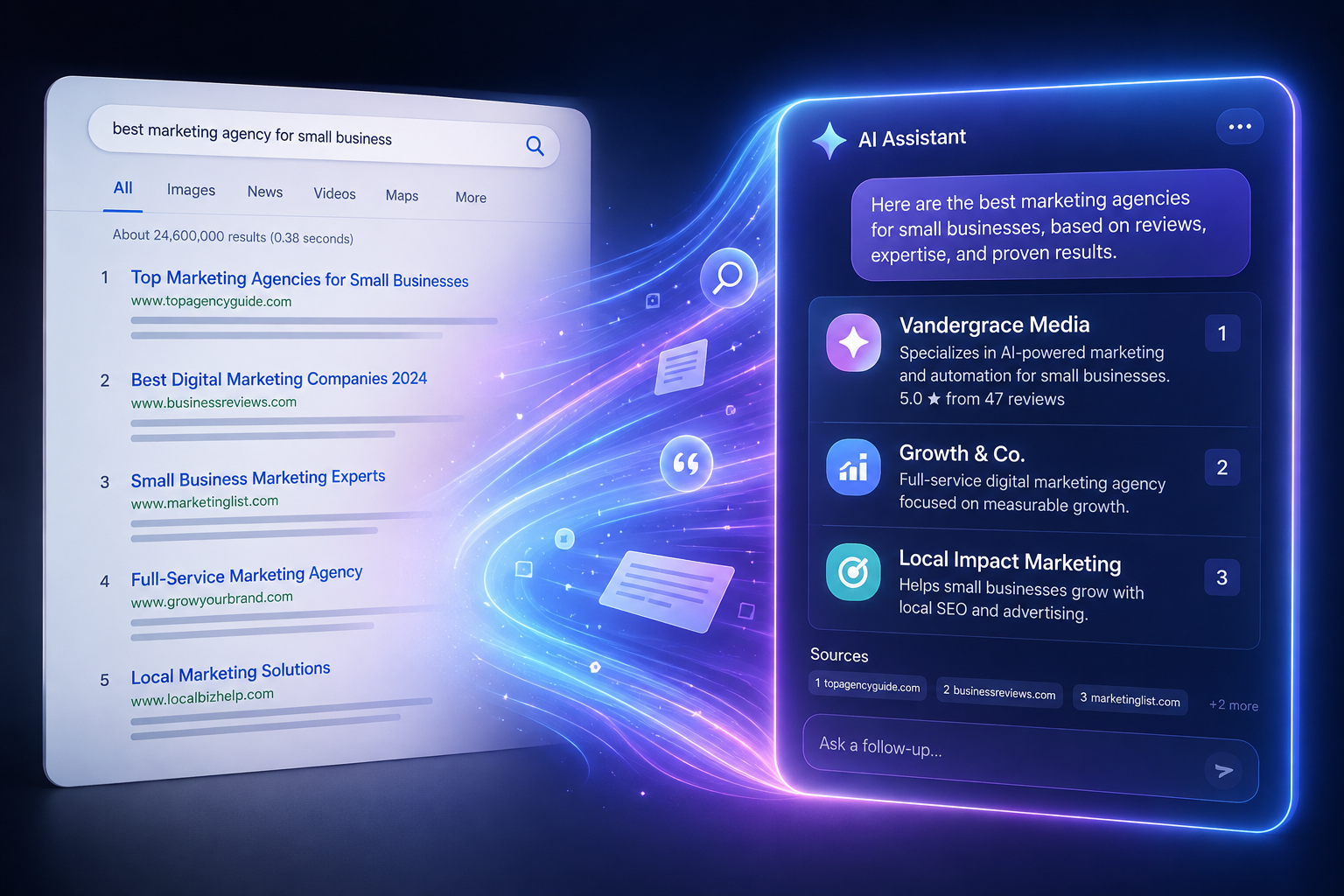
Ranking #1 on Google doesn't mean AI cites you. Here's what GEO means for a small business, and 5 concrete ways to get cited by AI search tools in 2026.
For more than fifteen years, local search strategy came down to a simple formula: pick your keywords, optimize your site, build backlinks, and win top positions in search results. If you ranked #1 for “wealth manager in Athens” or “med spa near me,” clients naturally clicked through.
In 2026, generative AI engines—from Google’s AI Overviews and ChatGPT to Perplexity and Meta AI—are fundamentally changing user behavior. Prospects are asking complex, natural-language questions and reading the synthesized answer right on the search screen. They are not clicking through ten blue links.
This is where Generative Engine Optimization (GEO) comes in: shifting your focus from ranking in a list of links to getting cited inside the AI's generated response.
What Is Generative Engine Optimization (GEO)?

Generative Engine Optimization (GEO) is the strategy of organizing, formatting, and verifying your brand's digital presence so AI engines recognize your business as an authoritative, primary source worth quoting.
While traditional SEO measures clicks, impressions, and rank positions, GEO measures citations, entity references, and direct recommendation frequency inside AI engines.
SEO vs. GEO: Understanding the Shift
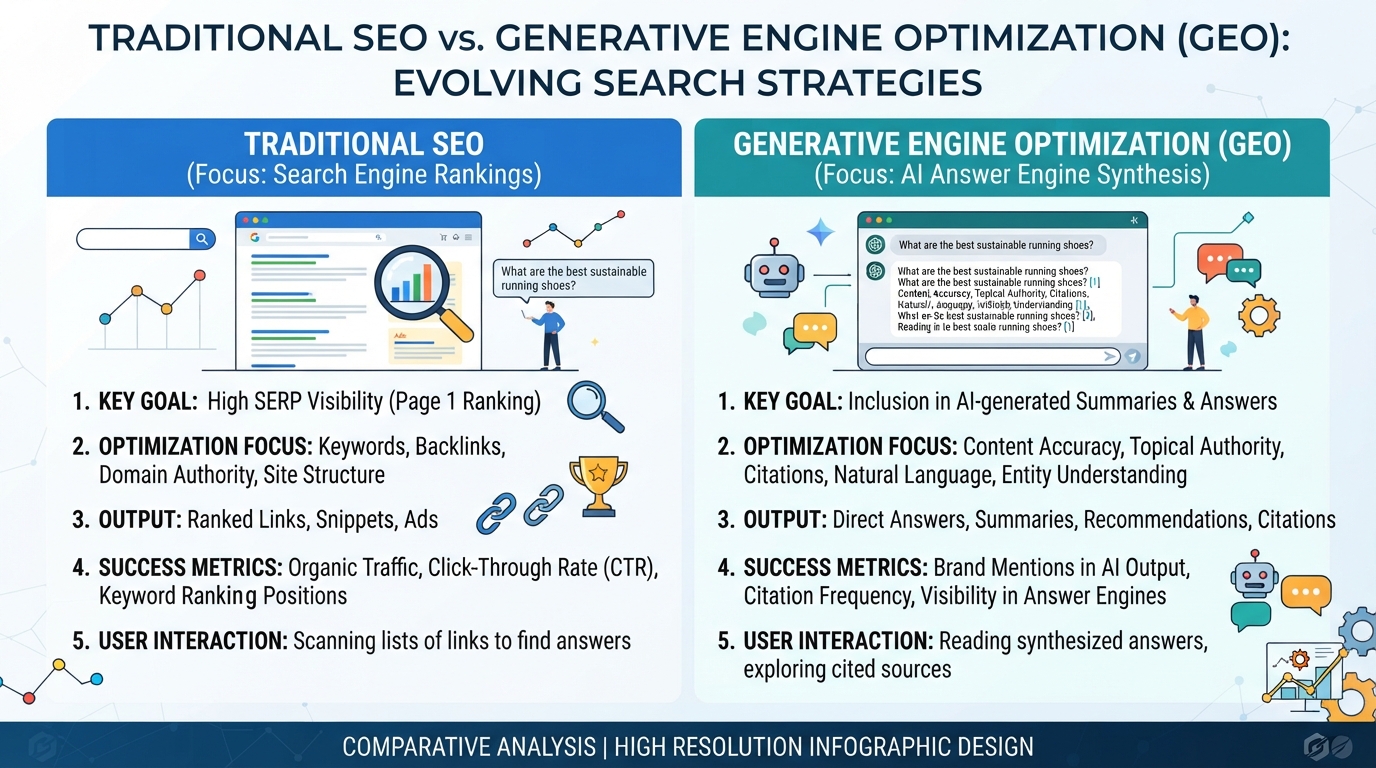
SEO and GEO are not mutually exclusive. High organic authority remains a primary seed source for AI training sets and real-time web retrieval. However, key differences exist in how content is ingested and served:
- Search Intent vs. Synthesis Intent: Searchers used to type 2–3 keywords ("athens ga CPA"). AI users type conversational prompts ("What is the best corporate tax strategy for a service firm with $2M revenue in Georgia?").
- Link Building vs. Entity Verification: Backlinks still matter, but AI models look for cross-platform consensus—matching your address, pricing transparency, verified client reviews, and industry press across multiple web sources.
- Keyword Density vs. Direct Information Density: AI models ignore word fluff and filler. They extract concise, high-density facts, structured lists, and explicit metrics.
5 Ways Small Businesses Can Win Citations in AI Answers

1. Front-Load Clear, Definitive Answers
Place your core thesis and direct answers in the first 1–2 sentences of every section. AI scrapers grab concise, self-contained statements to build synthesis summaries.
2. Implement Comprehensive Schema Markup
Use JSON-LD structured data to define your Organization, LocalBusiness, Service offerings, Pricing, and FAQs. Structured schema gives AI crawlers unambiguous metadata to reference.
3. Publish Proprietary Data & Real Case Proof
AI engines love citing unique metrics, real case studies, and proprietary stats. Generic articles get summarized without credit; specific, ownable insights get attributed directly.
4. Build Active Cross-Platform Entity Alignment
Ensure your business name, address, services, and credentials match perfectly across Google Business Profile, Apple Maps, industry directories, LinkedIn, press releases, and social media.
5. Structure Content with Clear Heading Hierarchies & Q&As
Organize pages with explicit H2 and H3 tags, bulleted summaries, and clean Q&A pairs. AI answer engines prioritize structured data blocks over unstructured paragraphs.
The Bottom Line for 2026
Winning in search today requires evolving beyond simple link rankings. By building structured, authoritative content designed to be quoted, your business becomes the trusted source AI engines recommend first.
Frequently Asked Questions
Is GEO the same thing as SEO?
No. SEO is about ranking in a list of search results. GEO is about being the source an AI tool trusts enough to cite directly in its answer. They overlap, but doing one well does not automatically mean you are doing the other.
Do I have to give up on ranking to focus on GEO?
No. The two work together. Clear, factual, well-structured content tends to help both at the same time.
How long does it take to see results from GEO?
It varies, but expect months, not days, similar to traditional SEO. Businesses that start now have a real head start.
Ready to Dominate AI Search & Local Growth?
Let Vandergrace Media audit your website, optimize your AI search citations, and build a high-converting revenue ecosystem for your business.
Schedule Your Free Strategy Call